
Q345R vs SA516 Grade 70: Key Differences, Equivalence & Selection Guide
📑 Table of Contents
If you are looking for the equivalent material of Q345R, SA516 Grade 70 is the most commonly accepted alternative under ASME standards. Although they are produced according to different specifications, both grades are widely used for pressure vessels, boilers, storage tanks, and heat exchangers.
✅ Key Takeaway: Q345R (GB/T 713.2) and SA516 Grade 70 (ASME SA-516) are widely regarded as equivalent for many pressure vessel applications. However, substitution should always be verified against the applicable design code and project specification.
1. Standards & Designation
- Q345R — Chinese national standard GB/T 713.2-2023 (effective March 2024).
“Q” = Yield strength (Qu), “345” = minimum yield (MPa) for ≤16mm thickness, “R” = Pressure vessel (Rongqi). - SA516 Grade 70 — American ASME SA-516/SA-516M (identical to ASTM A516/A516M).
“SA” = ASME specification, “70” = minimum tensile strength in ksi (≈485 MPa). Also designated as SA516 Gr485 based on tensile strength in MPa.
📌 Equivalence Confirmation: The GB/T 713.2-2023 standard itself lists SA516 Grade 70 as the nearest equivalent to Q345R in its international cross-reference table. Both are the most widely used pressure vessel steel grades in China and the United States, respectively.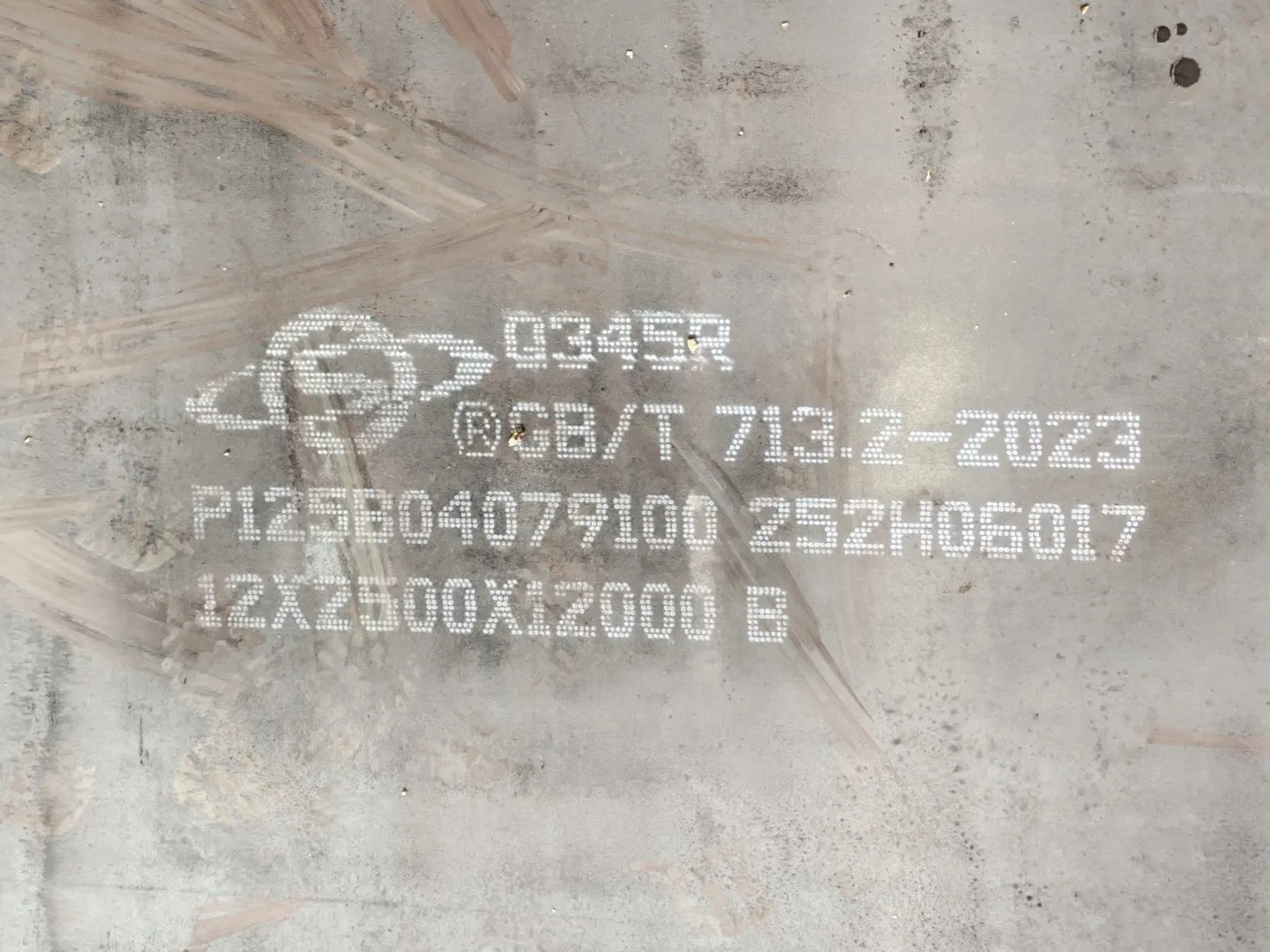
2. Q345R vs SA516 Grade 70 – Quick Comparison
3. Chemical Composition Comparison
🔍 Observation: Q345R adopts a low-carbon, high-manganese design that improves weldability and toughness. The most notable difference is Q345R's stricter sulfur control (0.010% vs 0.025%), which enhances resistance to hot cracking. Q345R also specifies micro-alloying elements (Nb+V+Ti) for grain refinement, while SA516 Gr.70 does not.
4. Mechanical Properties Comparison
📊 Observation: Q345R offers higher yield strength (≈345 MPa vs 260 MPa), enabling thinner and lighter designs. SA516 Gr.70 provides superior low-temperature toughness down to −46°C, making it the preferred choice for cryogenic and cold-climate applications. Both grades have a Carbon Equivalent below 0.50%, ensuring good weldability in standard fabrication processes.
5. Why They Are Considered Equivalent
📋 GB/T 150.2 Official Recognition
China's pressure vessel design standard GB/T 150.2 officially permits the use of SA516 Grade 70 as an alternative material. When SA516 Gr.70 is used, its carbon, phosphorus, sulfur content, elongation, and impact energy must meet the same supplementary requirements as Q345R, ensuring equivalent safety and performance.
📊 Practical Equivalence
Engineering calculations show that under the same technical parameters, Q345R and SA516 Gr.70 produce essentially identical results in terms of load-bearing capacity and required thickness. While Q345R has a higher specified yield strength, the practical difference is accommodated through design safety margins.
🏭 Industry Practice
In the steel industry, Q345R is routinely promoted as the Chinese equivalent to SA516 Gr.70. Many Chinese steel mills offer both grades and can provide cross-certification to meet project requirements in either standard system.
6. Can Q345R Replace SA516 Grade 70?
Yes—but only if specific conditions are met.
- Design Code Acceptance: If the project follows Chinese GB standards (e.g., GB/T 150.2), Q345R can be used as an equivalent alternative to SA516 Gr.70, provided the supplementary requirements are met.
- Temperature Limitations: Q345R is generally specified with impact testing at 0°C or −20°C (by agreement), while SA516 Gr.70 offers standard low-temperature toughness down to −46°C. For applications below −20°C, SA516 Gr.70 is the safer choice.
- Weldability Consideration: Q345R's lower carbon content (≤0.20% vs 0.27–0.31% for SA516 Gr.70) and stricter sulfur control give it better weldability, which can be an advantage in complex fabrication.
⚠️ Important: Q345R and SA516 Gr.70 are not fully identical materials. They are widely regarded as equivalent for many pressure vessel applications, but substitution should always be verified against the applicable design code and project specification. For ASME-coded projects, SA516 Gr.70 is required unless the engineer explicitly approves the substitution.
7. Selection Guide – Which One to Choose?
🇨🇳 Choose Q345R When
- Project follows Chinese GB standards
- Cost optimization is a priority (domestically produced)
- Higher yield strength (345 MPa) enables thinner designs
- Operating temperature ≥ 0°C (standard) or ≥ −20°C (on request)
- Better weldability is desired (lower CEV)
🇺🇸 Choose SA516 Gr.70 When
- Project requires ASME code compliance
- Low-temperature service down to −46°C
- International/export project with American specifications
- Normalized delivery is mandatory (thickness > 40mm)
- Low-temperature impact toughness is critical
💡 Bottom Line: Q345R and SA516 Gr.70 are functionally equivalent for most pressure vessel applications. The choice typically depends on the project's design code, operating temperature, and certification requirements rather than technical performance differences.
8. Frequently Asked Questions (FAQ)
❓ Is Q345R equivalent to SA516 Grade 70?
Yes—they are widely regarded as equivalent for many pressure vessel applications. GB/T 713.2 lists SA516 Gr.70 as the nearest equivalent to Q345R, and GB/T 150.2 permits using SA516 Gr.70 as an alternative when supplementary requirements are met.
❓ Which one is stronger?
Q345R has higher specified yield strength (≥345 MPa vs ≥260 MPa for SA516 Gr.70) and slightly higher tensile strength (510–640 MPa vs 485–620 MPa). This allows Q345R to be used in thinner sections for the same load.
❓ Can Q345R be used under ASME?
Q345R is not listed in ASME Section II. For ASME-coded projects, SA516 Gr.70 is required. However, some engineering firms accept Q345R as an equivalent material if the project design code (e.g., GB/T 150.2) permits and the end user approves.
❓ Does Q345R require PWHT?
PWHT (Post-Weld Heat Treatment) is optional for Q345R and depends on the design code and service conditions. SA516 Gr.70 is generally considered more suitable for PWHT applications, particularly in thicker sections.
❓ Does SA516 Grade 70 support HIC?
Yes—HIC (Hydrogen-Induced Cracking) testing is available as a supplementary requirement for SA516 Gr.70. Q345R also supports optional HIC testing upon request.
❓ Is Q345R cheaper than SA516 Grade 70?
Generally, yes. Q345R is domestically produced in China and is typically more cost-effective than SA516 Gr.70, which is often imported. However, pricing varies by thickness, quantity, and market conditions.
📚 References & Standards
- [1] GB/T 713.2-2023, Steel plate, sheet and strip for pressure equipments — Part 2: Non-alloy and alloy steel with specified temperature properties
- [2] ASME SA-516/SA-516M, Standard Specification for Pressure Vessel Plates, Carbon Steel, for Moderate- and Lower-Temperature Service
- [3] GB/T 150.2-2011 (including Amendment), Pressure vessels — Part 2: Materials
- [4] ASTM A20 / A20M — General Requirements for Pressure Vessel Plates
- [5] ISO 9328:2018, Steel flat products for pressure purposes
- [6] ASME Section VIII — Rules for Construction of Pressure Vessels
- 🔗 Visit Cehe Steel for more technical resources →
Need Q345R or SA516 Grade 70 Steel Plates?
CEHE STEEL supplies high-quality pressure vessel steel plates for global projects.